The handoff is part of the job
A team can know its own task and still miss what the next team needs. Training should make the dependencies visible.
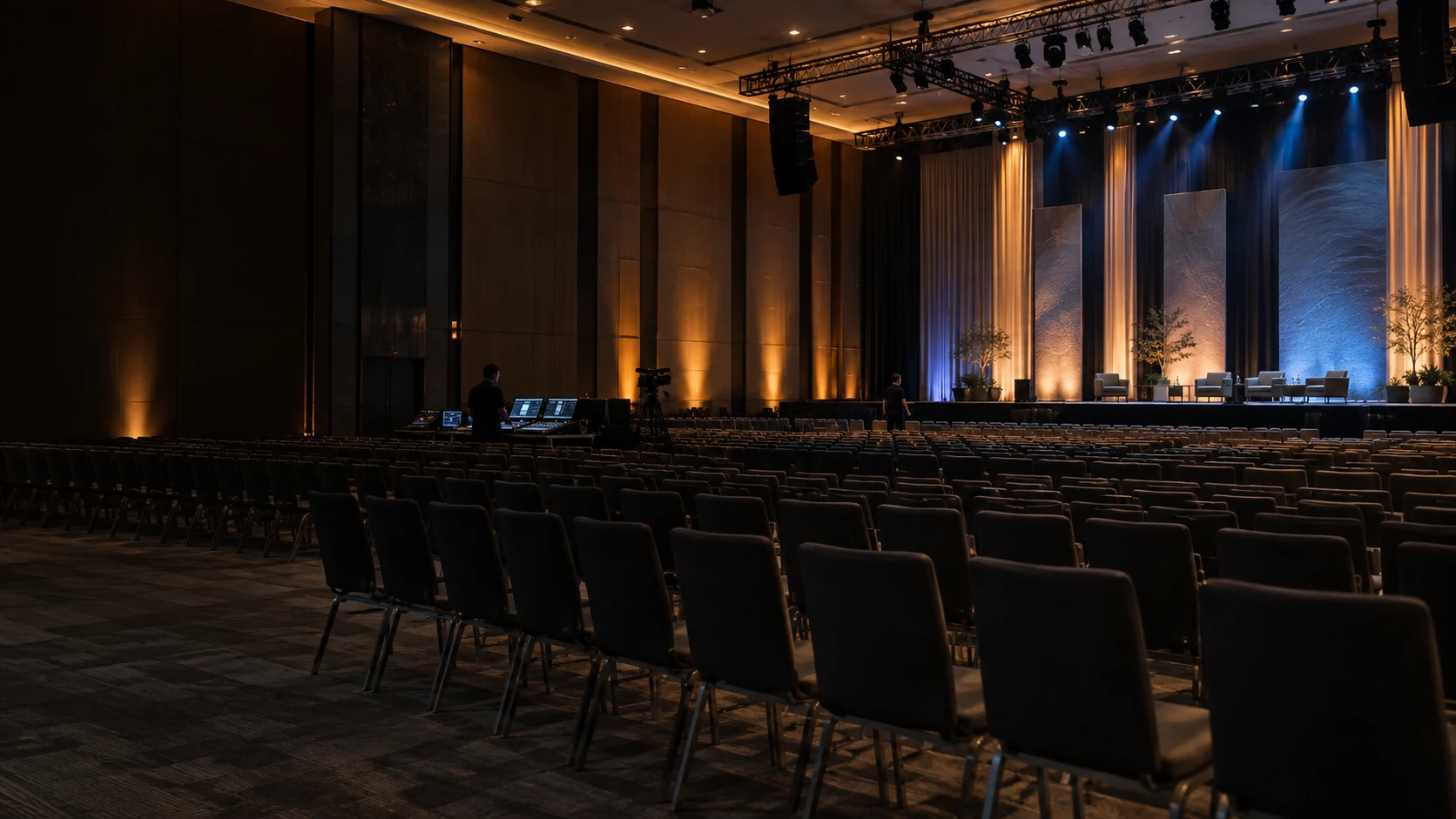
Get a large, changing crew ready before the doors open. Give freelancers and short-term staff a quick rehearsal of their role, with a shared event brief and feedback that shows supervisors where to focus.
For organisers, venues, event academies and crew leads
Freelancers arrive at different times with different experience of your venue. The brief still has to travel across registration, production, security and suppliers before the first guest arrives, and a missed handoff can surface when there is no time to teach it again.
A team can know its own task and still miss what the next team needs. Training should make the dependencies visible.
Freelancers and short-term staff may be new to this venue even when they know their trade. Give each role a short, scenario-based run-through of the decisions and handoffs that matter before the shift begins.
A completed briefing tells you who attended. A playable scenario also shows where people interpreted the same situation differently, so supervisors know what to cover together.
We turn a real situation from your operation into a playable scenario. For a large freelancer crew, the same brief can be assigned by role before arrival, then discussed with supervisors where choices diverge.
The industry research helps us choose where to look. Your team’s recurring situations determine what we build.
PCMA’s 2025 EMEA survey put engagement and audience growth among organisers’ leading priorities. Respondents also described workload and limited data as obstacles.
PCMA, 2025 EMEA survey321 respondents; mostly European. Directional context, not a global estimate.HSE guidance calls for relevant risk information, site induction and task briefings for employees and contractors. Short-term crew members need that shared context even when they already know their trade.
HSE, managing an eventUK guidance. Apply the relevant local plan, qualifications and supervision arrangements.The Events Industry Council’s 2025 standards cover event design and marketing alongside risk, stakeholders, technology and evaluation. A training offer needs to reach beyond show-day operations.
EIC, 2025 competency standardsCompetency coverage; these concepts do not constitute CMP certification.Prepare permanent staff and freelancers with practice built around their role. Explore a skill to see the game behind it.
A shared plan for a crew that changes from show to show.
Practise the choices behind a programme that runs on time.
Connect the promise you make with the experience you deliver.
Each game is built around your team’s roles and approved ways of working. Discuss a different skill →
Play the three live demos first: an AI voice simulator you talk to, a 3D safety simulation and a venue management game. Then explore five ideas for a custom training game, with artwork showing how each could look. Open a card to see the decisions players would practise.
 Live demoAI voice simulator
Sales & exhibitor service
Live AI voice roleplay
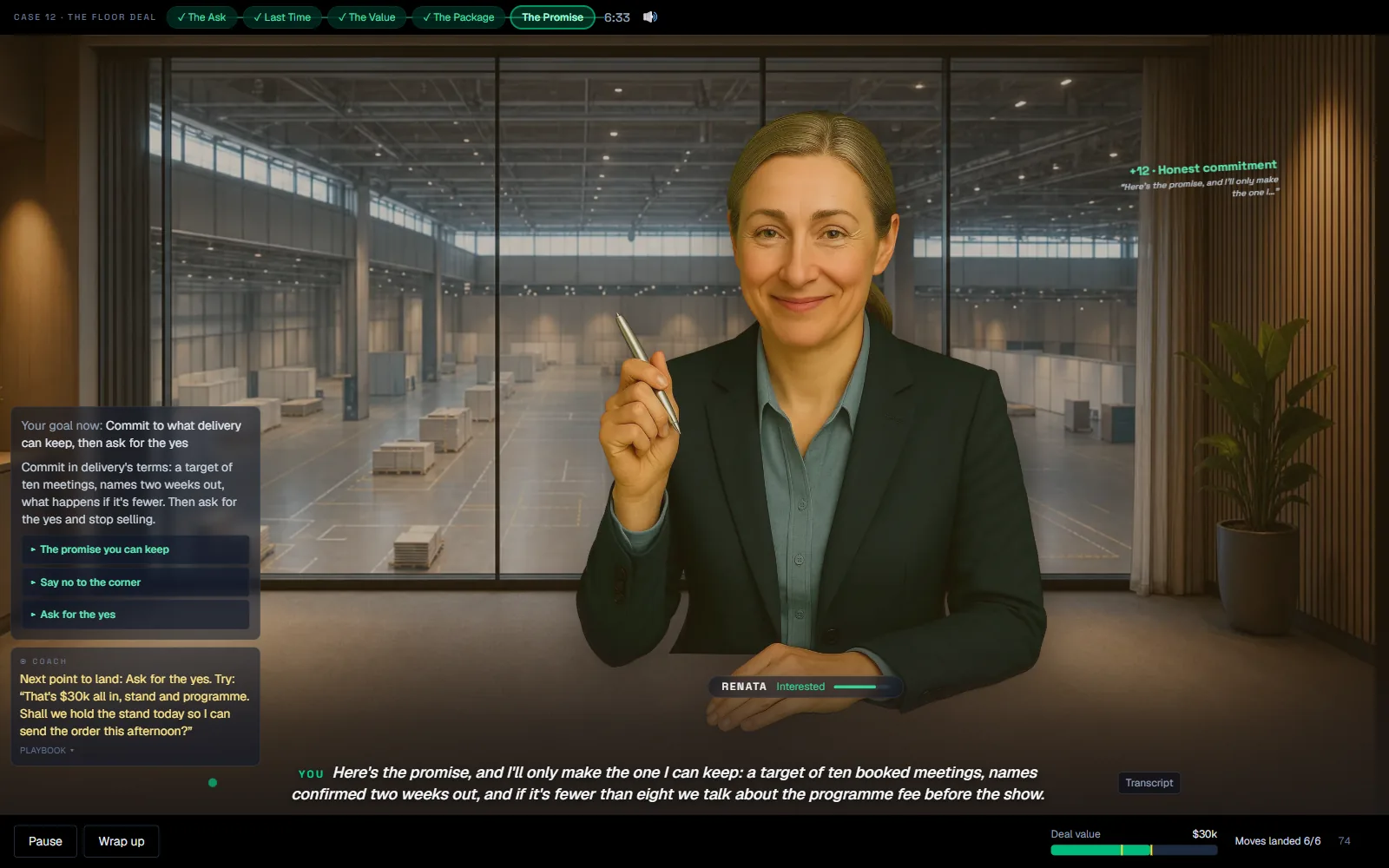
Renata spent $42k on your show two years ago and got two conversations. She has twenty minutes and a German show in her other hand. Win her back with a promise your delivery team can keep.
The Floor Deal is a live scenario in Counterpart, our AI conversation simulator. You speak out loud, an AI exhibitor answers back in her own voice, and a coach scores every line you say.
You sell exhibition space, and today is floor plan release day. Renata Vogel, marketing director at a pump manufacturer, took a corner stand two years ago, spent $42k and came away with two useful conversations, so she did not come back last year. She opens by asking what you would recommend, and recommending is the trap. Ask what a good March looks like for her first, answer the value question with visitor numbers instead of adjectives, size the stand to her buyers, and close on a promise your delivery team can keep. Her confidence and the deal value move with every line, and the debrief reads back what you asked, what you promised and what you left on the table.
The lesson is selling what delivery can keep. An over-promise raises her confidence on the turn you make it and loses the deal in the debrief, because in March it is the operations team who has to walk it back. A bigger stand in the wrong hall scores bronze however much it is worth, because the buyers she needs walk a different hall. The case file, the scoring rubric and the coach’s playbook are all inside the demo, so a team can play it, read the report and go again.
Exhibition sales, sponsorship and account service teams. The on-site request and the renewal call are drafted as the next two scenarios on the same floor.
 Live demo
Safety & security
3D incident-management simulation
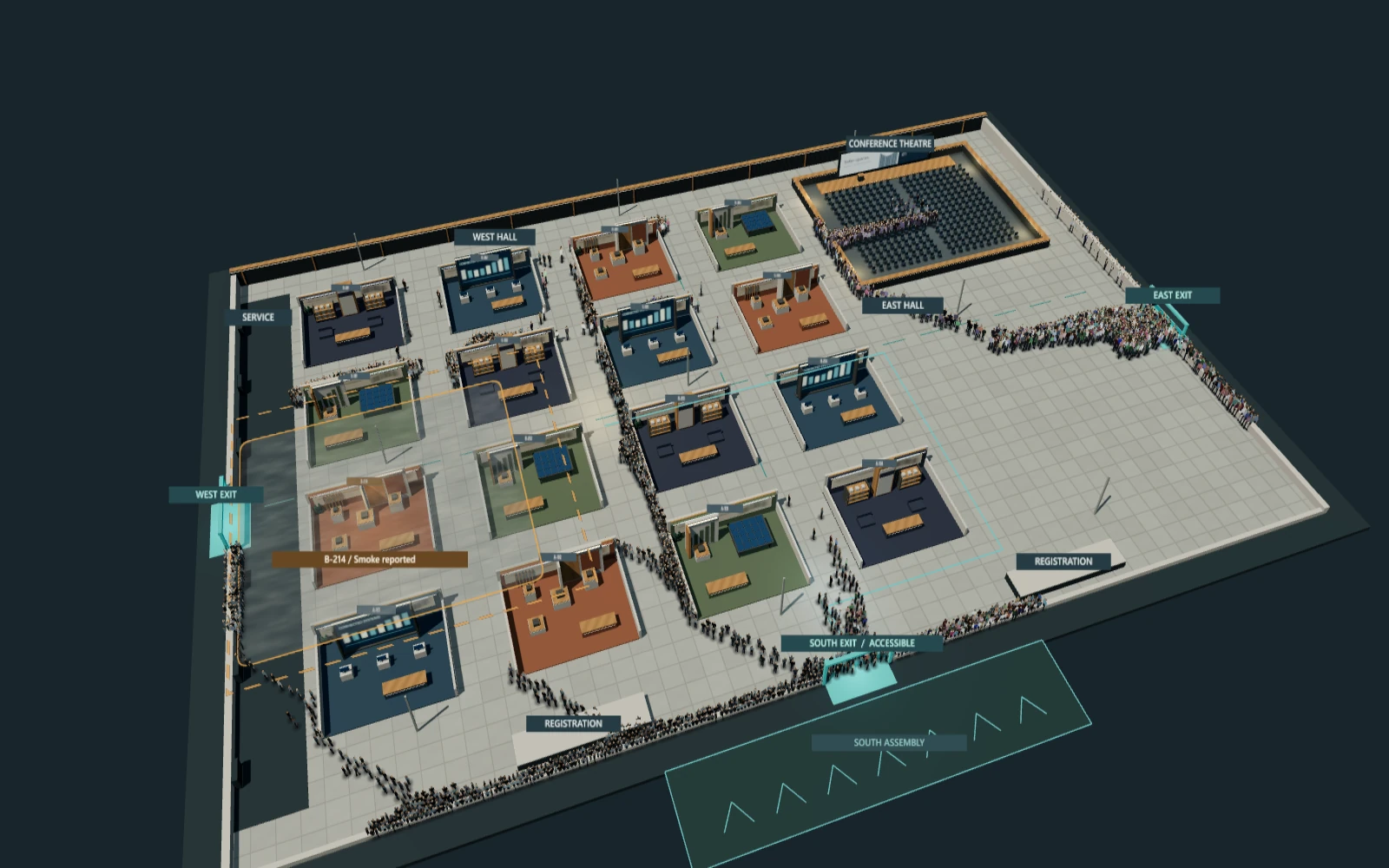
Respond as smoke affects an exhibition hall and see how each decision changes the next move.
Take the duty manager’s role as smoke affects an exhibition hall. Raise the alarm, guide visitors toward usable exits and arrange assistance. Coaching explains the decisions; a short debrief shows what happened.
Prioritise assistance and keep exit routes usable as conditions change. A fictional scenario for a focused debrief with your team.
 Live demo
Operations & logistics
3D venue management game
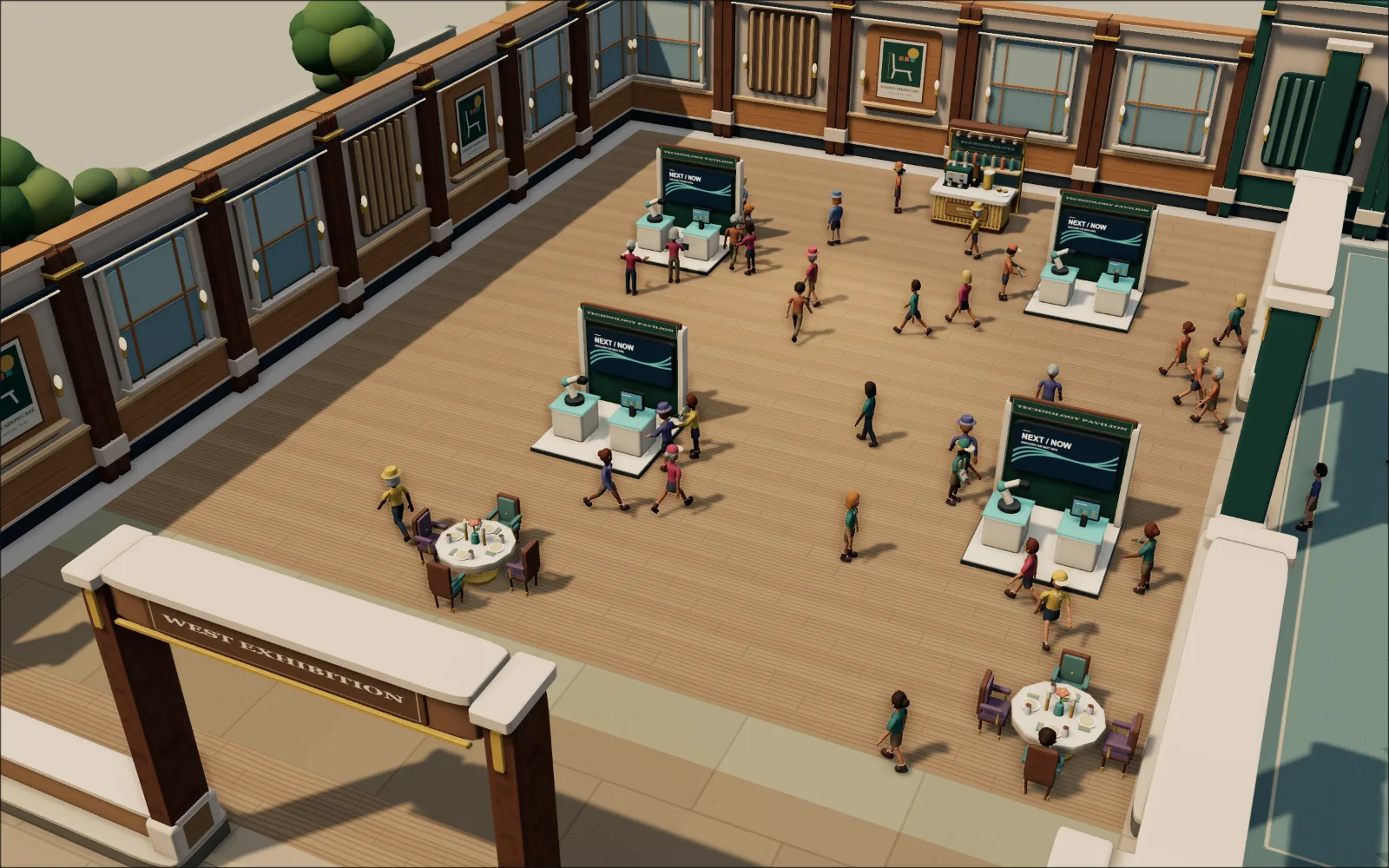
Your first client expects 32 guests checked in and a band on stage on time. You lay out the hall, hire the crew and set the running order. Then a stage channel dies at soundcheck, and the doors cannot open until your technician fixes it.
Eventory is a 3D management game set in the Juniper Events Centre, a venue with four halls. You run a small event company and take contracts that grow from a 32-guest showcase to Juniper Live for 240 guests, and the contracts add new parts of the job as they grow, from exhibitor footfall at a maker market to a seated gala dinner with a patron’s speech on the run sheet.
Every event runs through the same loop. You read the brief, place stages, bars, seating and first aid, hire hosts, hospitality crew, technicians and stewards, and pass a readiness check before the doors open. Then the event runs live and problems arrive while it does. At the maker market one exhibitor says nobody is finding their stand, and you have about forty seconds to send visitors their way.
Each problem pauses the game on a card that explains what happened, the real-world principle behind it and the simpler rule the game uses in its place, so players can tell the practice apart from the mechanic. The event report then scores every client promise separately, so a strong result on one cannot cover a miss on another. In our playtest all four maker stands beat their visit target, and the exhibitor-satisfaction promise still failed because the maker who complained never got the extra visitors. The game states its own limits: it simplifies staffing and technical work, and its recorded results are examples for a team to discuss, with no claim to measure real-world competence.
Event coordinators, venue operations teams and new event managers who need to see how layout, crew and the running order depend on each other before they run a live show.
 Game concept
Safety & security
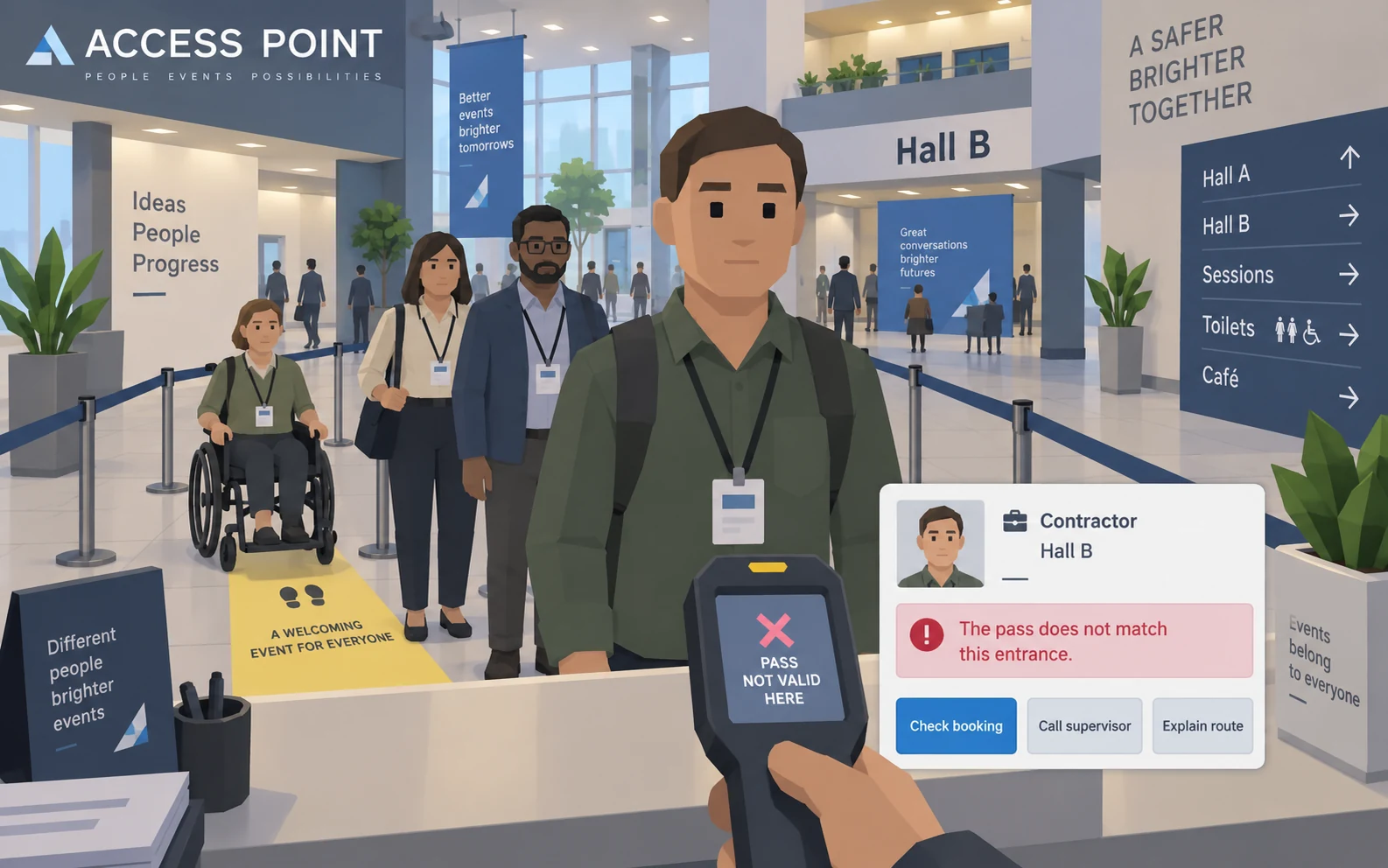
First-person judgement game
Run an entrance where the queue keeps moving and every exception needs a clear decision.
Check a pass against the event brief, clarify a visitor’s request and choose what to resolve or escalate. New shifts introduce contractor access, accessibility needs and a service complaint without rewarding rushed checks.
Consistent access decisions, respectful communication and escalation within the learner’s authority.
Front-of-house teams, stewards and security supervisors
Discuss a game like this →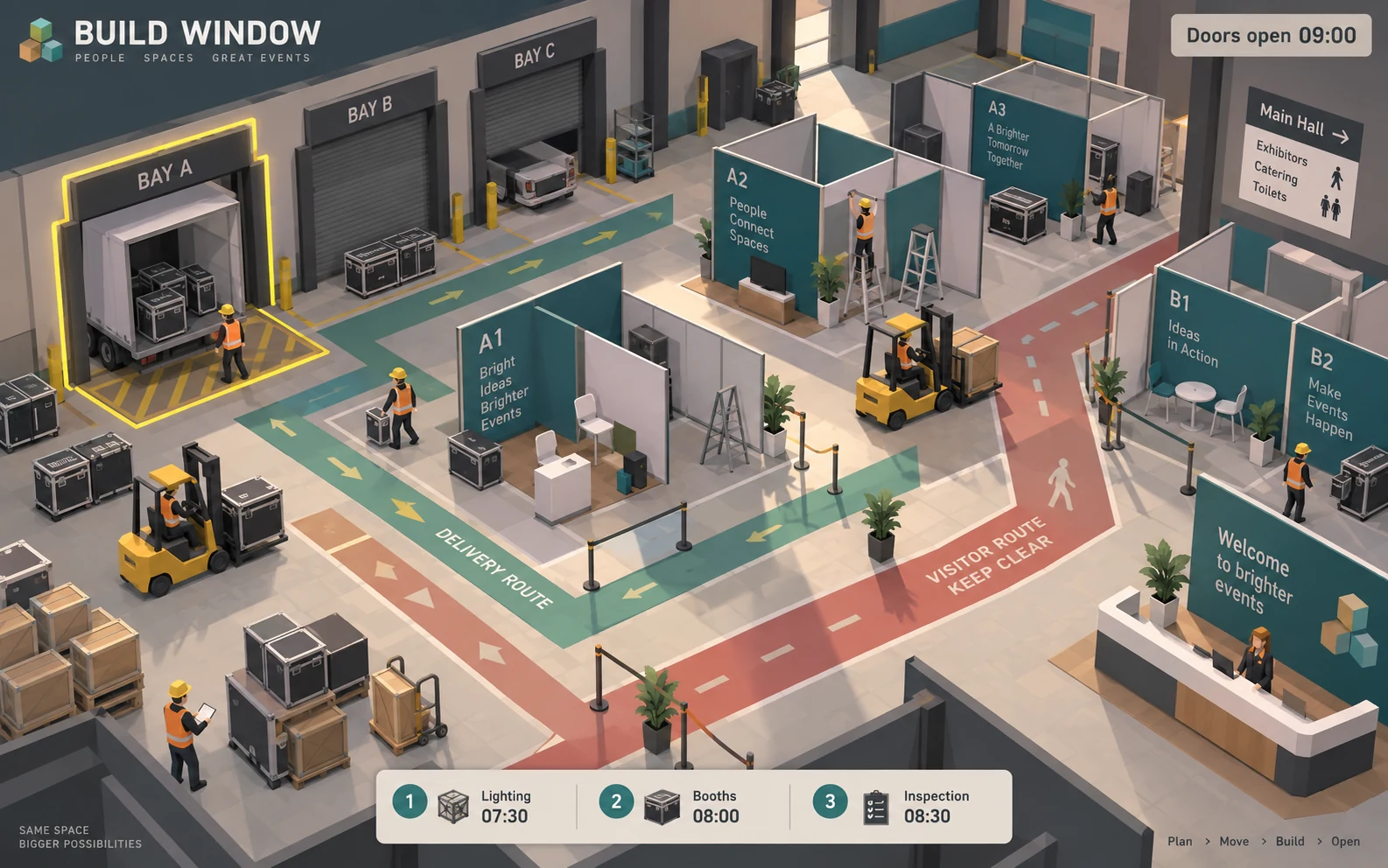 Game concept
Operations & logistics
Isometric planning puzzle
Fit the build into a fixed window while contractors compete for the same space.
Place delivery slots and assign crews on a small venue map. A late truck or unfinished handover changes the plan. Decide what can move, what depends on another task and when the event owner needs to intervene.
Task dependencies, contractor coordination and the difference between a reported task and a verified handover.
Event operations, venue teams and supplier coordinators
Discuss a game like this →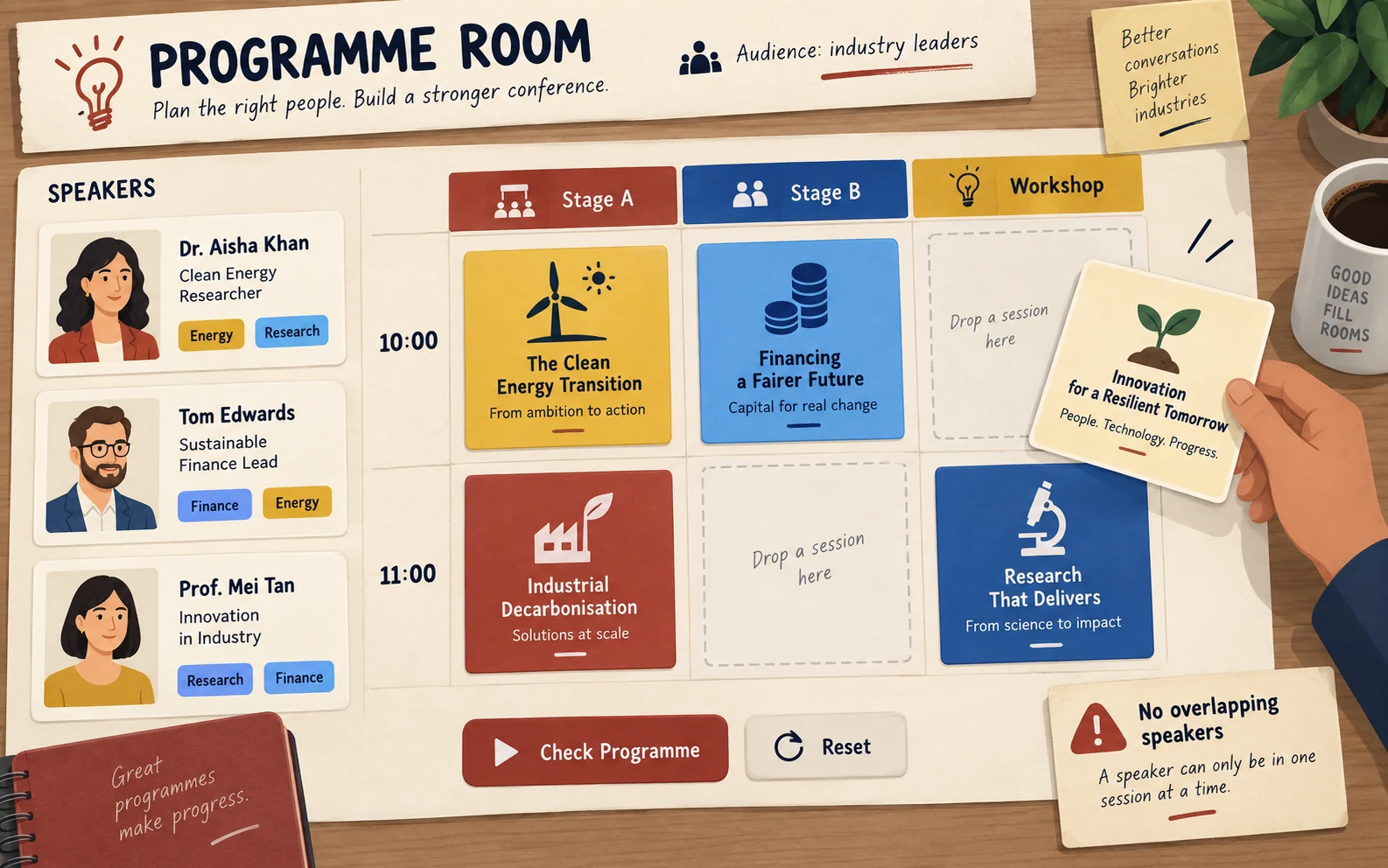 Game concept
Programme & content
Editorial card and scheduling game
Build a programme that gives the audience a reason to attend, then defend the choices.
Choose sessions from a set of speaker and topic cards. Fit them to audience needs, available stages and production constraints. Across several editions, replace weak sessions, resolve clashes and respond when a headline speaker drops out.
Editorial judgement, audience relevance and communicating programme changes to the teams affected.
Conference producers, content teams and speaker managers
Discuss a game like this →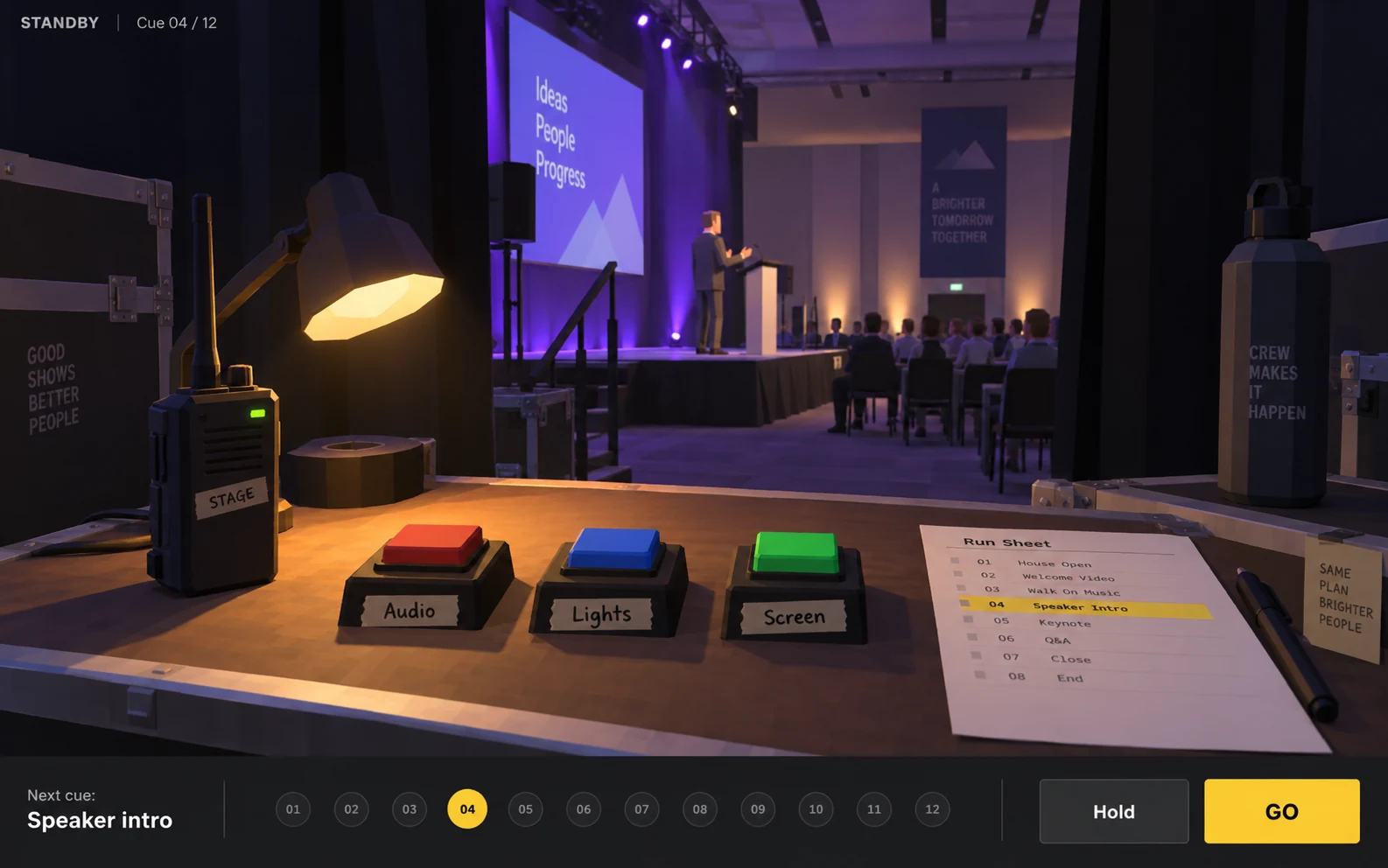 Game concept
Live production
Show-calling and cue simulation
Call a small show from backstage and keep the crew aligned when the running order changes.
Read the run sheet, check readiness and call audio, screen and lighting cues. A rehearsal exposes a missed handoff; the live run tests whether you can hold a cue, select an approved fallback and communicate the revised sequence.
Cue discipline, readiness checks and recovery communication, with a debrief of what the audience experienced.
Show callers, stage managers and production coordinators
Discuss a game like this →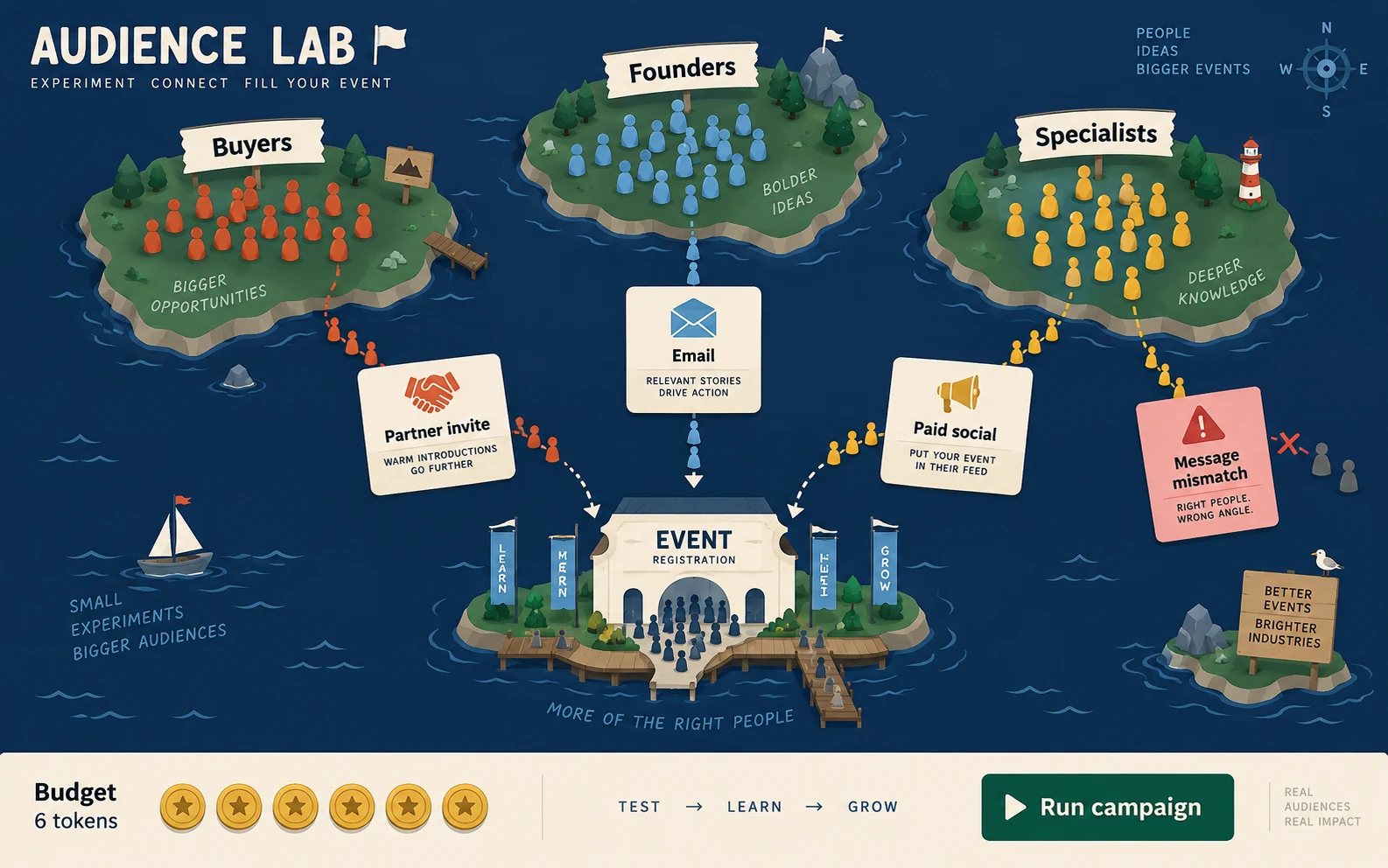 Game concept
Marketing & audience
Turn-based campaign strategy
Spend a limited budget to bring the right people into the room.
Choose an audience, pair it with a message and assign campaign tokens to channels. Each round returns registration and audience-fit signals. Test a change, read the result and decide where the next round of effort belongs.
Segmentation, message fit and interpreting results beyond clicks or total registrations.
Event marketers, audience development and community teams
Discuss a game like this →Use role-specific practice before arrival, then give supervisors a clear conversation about what still needs to be covered on site.
Prepare large freelancer cohorts with the same role-specific scenario before they arrive. Use the debrief to explain the reasons behind a decision and hand the open questions to the supervisor.
Rehearse handovers and exception handling with the people who own them. Build the scenario around your venue, suppliers and approval boundaries, then review the gaps before the live briefing.
Choose a recurring situation your team finds difficult, from a missed cue to an exhibitor promise. Review the decision and the downstream effect together.
A concept becomes useful when the brief, authority and feedback reflect the real job. We agree those with your subject experts before the build, including what a scenario can cover before site access.
Turn your run sheet, venue plan and anonymised cases into short role-specific practice. Assign the same event brief to registration, security, production and supplier teams, with the decisions each role can actually make.
Run a browser-based exercise for individuals or a facilitated session for a whole crew. Group the conversation by role so a supervisor can review common scenario gaps before the live briefing.
Use the choices people made in the scenario as prompts for a supervisor review. Follow up with the approved induction, local procedures and any required qualifications.
Change the venue details and role brief as your programme evolves. Your event team reviews safety content; practical induction and any required qualifications stay in place.
Choose the format with your training team. We design the session around the learner, the setting and the devices they use.
Assign a short scenario with the event brief. Crews can practise before arrival, with LMS integration scoped to your setup.
Design quick role briefings for freelancers and short-term staff to complete on their phones.
Bring venue, production and security leads together around one scenario, then compare their decisions.
Use a 3D venue or a custom VR build where layout, sightlines and movement matter to the learning.
Language, accessibility and reporting needs are agreed before the build.
Start with one situation. Build it with the people who know the work, then test it with the people who do it.
Choose the learner and a recurring decision. Agree what useful practice should show.
Map the choices and consequences with your subject experts. Set the learning focus.
Make a playable pilot. Test the feedback and controls with a small learner group.
Put it into the training session. Review learner choices and refine the next version.
Bring one situation from your next event. We’ll work through how it could become a game and what your team should learn from playing it.