Induction has to reach the job
Show where people can go, who owns the work and what to ask when the brief is incomplete. Let a new starter practise using the information before the site walk-through.
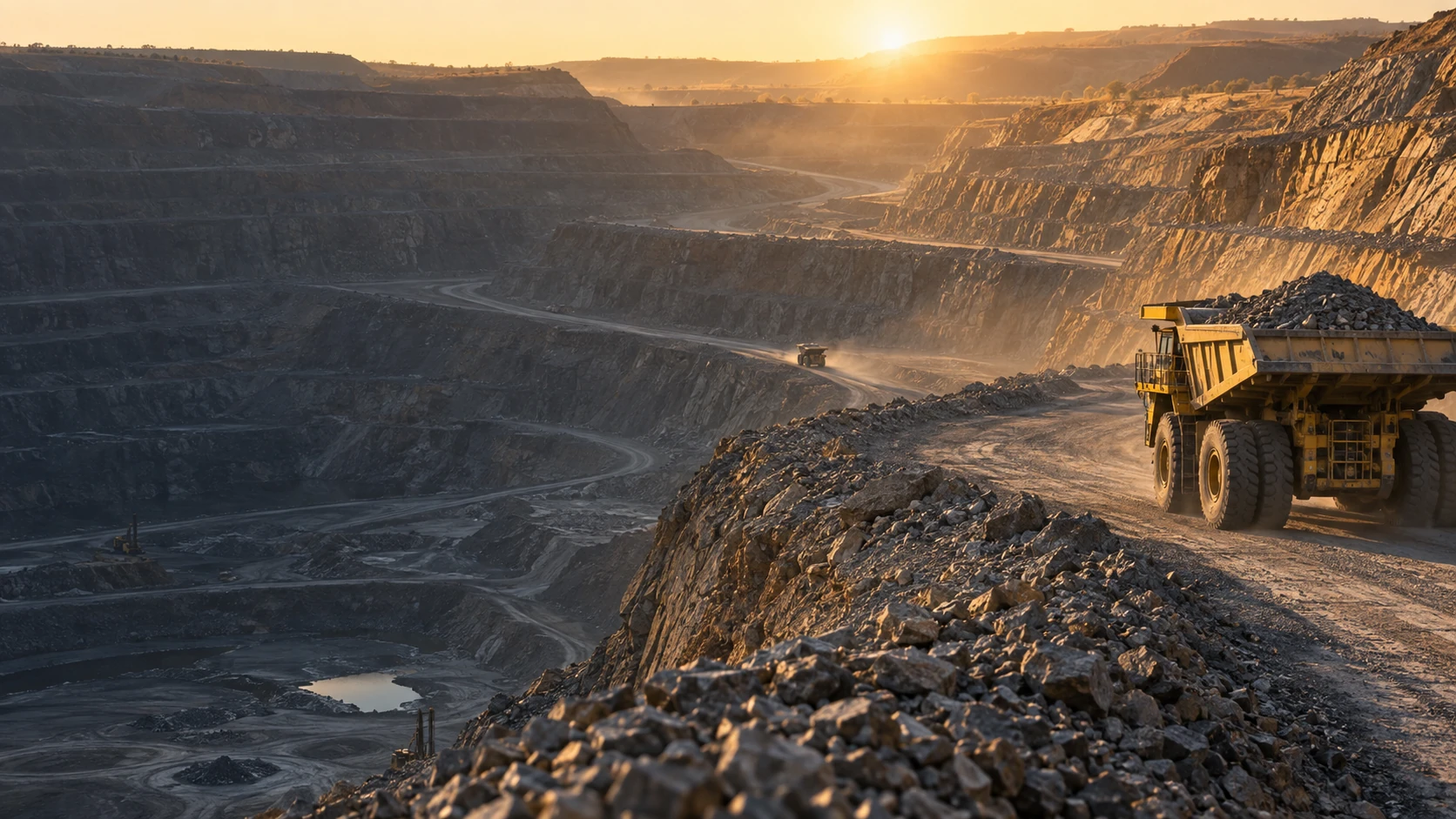
Every shift inherits someone else’s decisions. Help new starters understand the operation and give experienced crews practice with the handovers, checks and changing conditions that connect their work.
For mine operators, contractor training teams and technical academies
Contractors bring experience, but each site has its own hazards and work arrangements. Equipment status changes between shifts. A useful training game makes those local details part of the decision.
Show where people can go, who owns the work and what to ask when the brief is incomplete. Let a new starter practise using the information before the site walk-through.
Operations, maintenance and control need the same picture of unfinished work. Rehearse what must be verified and handed over when a job changes or a shift ends.
Help learners see how one stage affects the next. A small playable plant can make throughput, bottlenecks and recovery easier to discuss than a diagram alone.
A route update, an unresolved control or a missing handover detail can affect another team. Build a short game around that connection, then use the replay to discuss it.
These sources help us choose useful training situations. Your team’s workflow determines the scenario we build.
MSHA’s Part 46 contractor guidance distinguishes a contractor’s task experience from the hazards of a particular mine. It is a useful starting point for local induction practice.
MSHA, Part 46 contractor guidanceUS Part 46 scope; requirements vary by mine type and jurisdiction.ICMM’s critical control guidance connects control design with implementation and verification. A scenario can ask the crew what is known, what still needs checking and who owns the response.
ICMM, critical control management guideIndustry guidance. Games use the operator’s own control standards.Western Australia’s mine safety management system guidance covers role-specific induction and coordination, including shift handover. That supports practice built around the information the next crew needs.
WorkSafe WA, mine safety management systemsWestern Australian guidance; adapt content to the site’s approved arrangements.From the process line to the shift handover, choose where your crews need more practice. Each skill links to a game example.
Make the connection between each stage of the plant.
Turn local procedures into decisions people can rehearse.
Keep the working picture current across the operation.
Each game is built around your team’s roles and approved ways of working. Discuss a different skill →
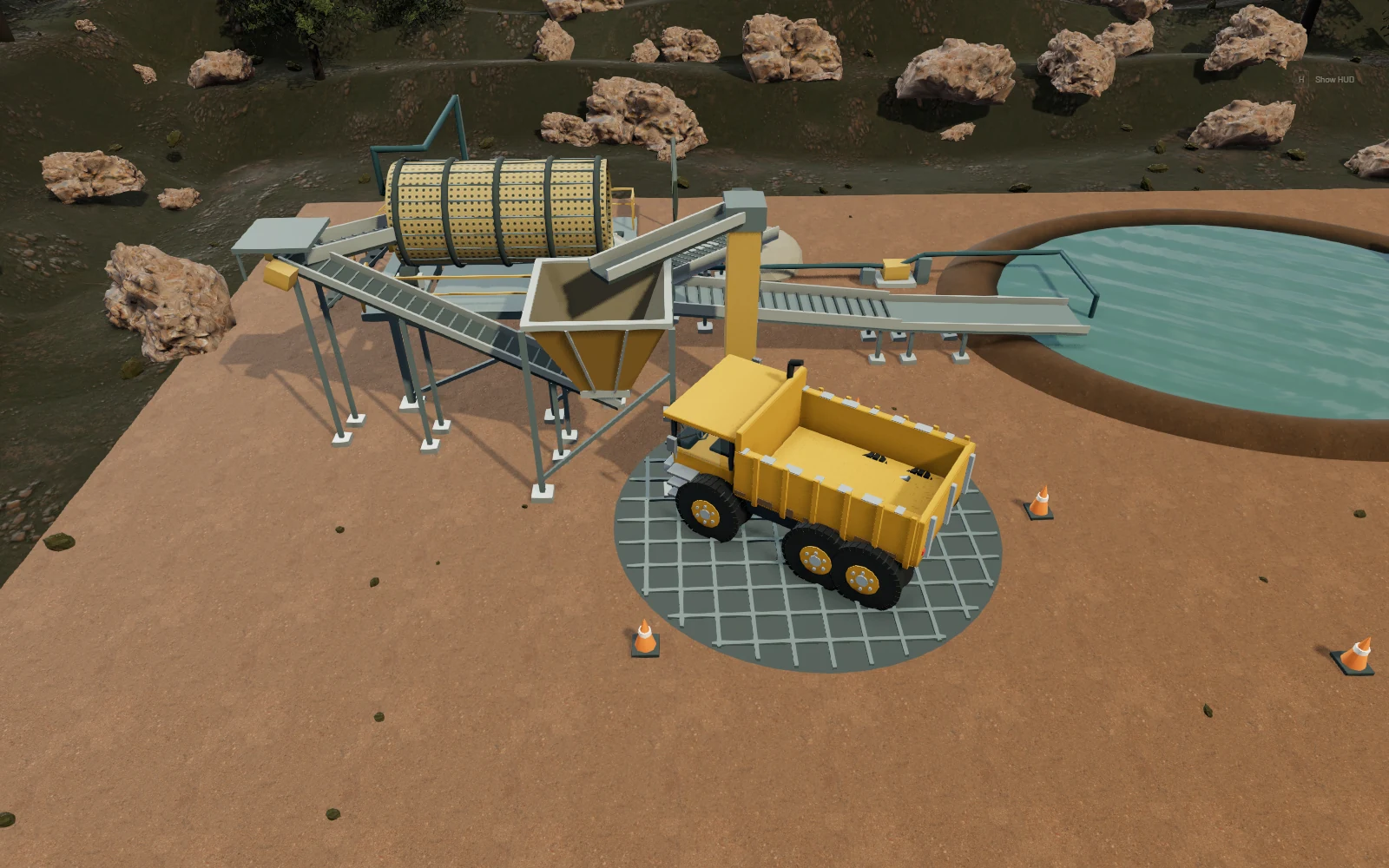
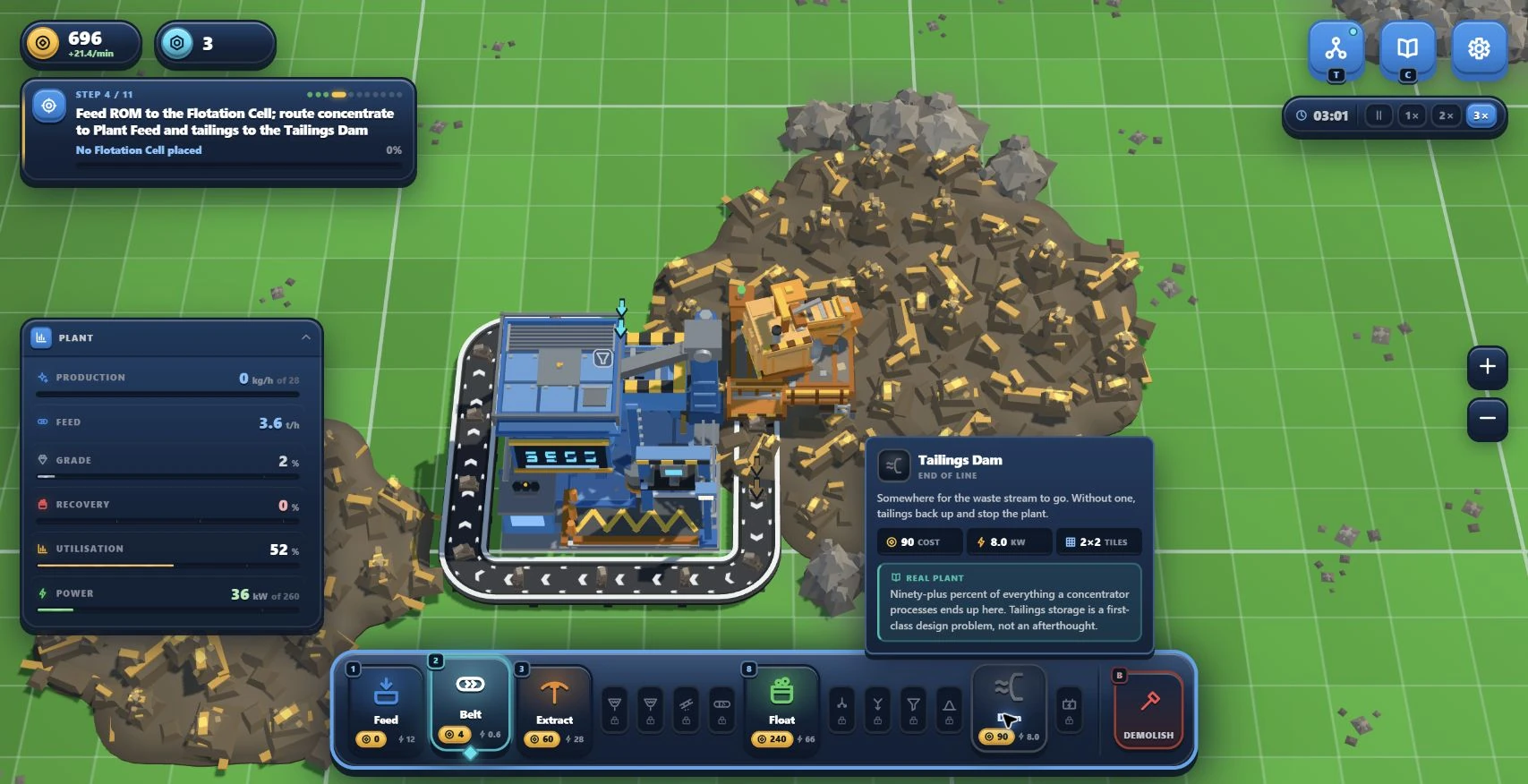
Play Aurum to work through a gold-mining shift, or Mining Line to build a mineral-processing plant. Both demos show actual gameplay; the five concepts illustrate other training possibilities.
 Live demo
Equipment operations & gold recovery
3D mining simulation
Take a load from excavation to gold recovery, then respond when an equipment fault interrupts the shift.
Sample the cuts, work the excavator and drive the haul truck to the wash plant. The first level guides you through a full production cycle and recovery tuning. The second introduces a hydraulic fault, with a response and maintenance handover before production resumes.
See how cut selection and wash-plant settings affect gold recovery, and practise the checks and handover decisions before restarting after a fault. The demo has two playable levels, with eight further training topics previewed.
 Live demo
Mineral processing
3D production-line builder
Build a route from ore to concentrate and discover why the plant needs each stage.
Site the plant feed, place an extractor and connect conveyors. Guided lessons introduce crushing, grinding and flotation as you build out the line and inspect its performance.
Connect process stages to feed, grade and recovery. See how layout and capacity constraints affect the plant in a simplified learning model.
 Game concept
Site & contractor induction
3D exploration with branching dialogue
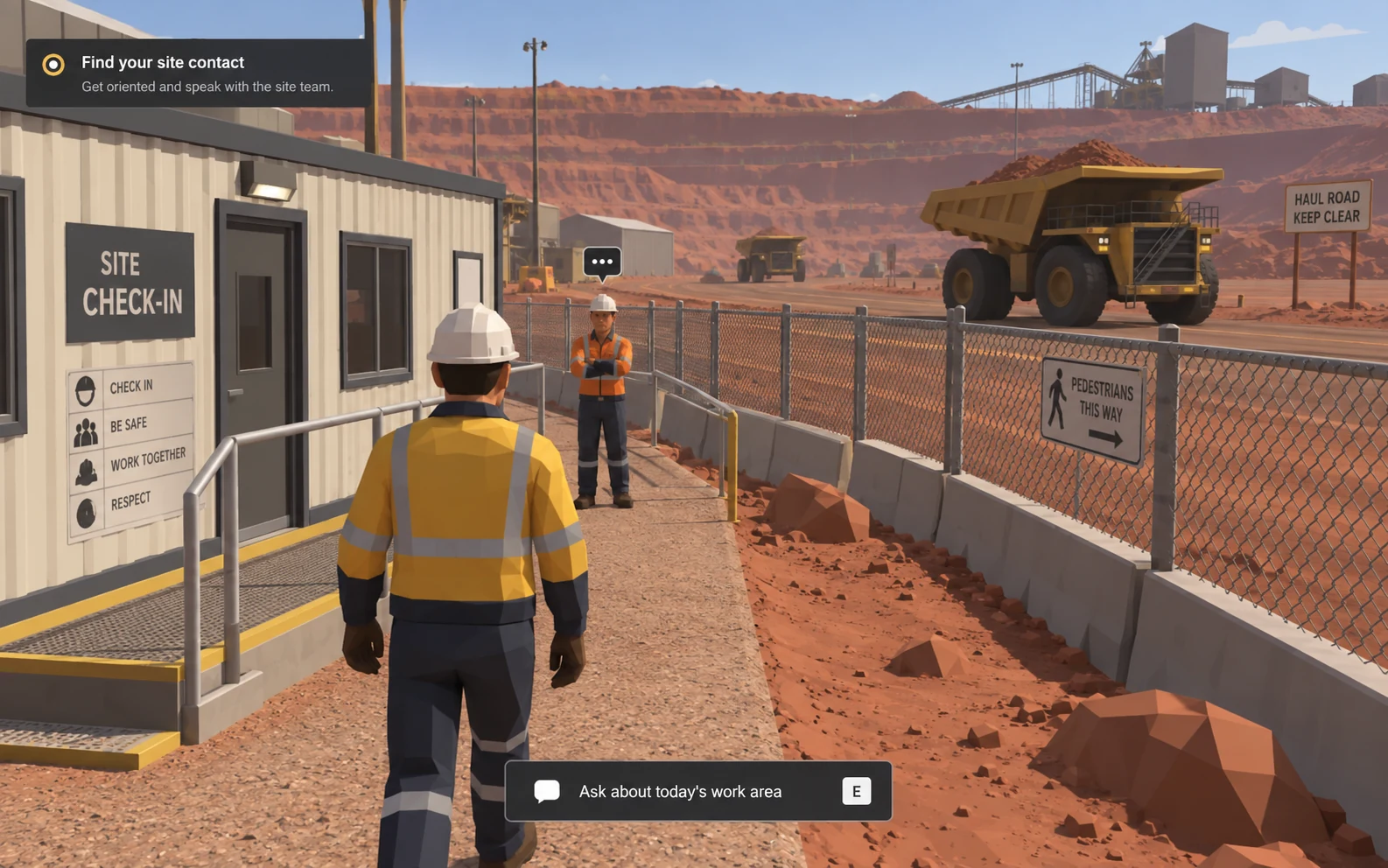
You know the trade. Now find out what is different about this site before work starts.
Explore a fictional surface mine, check the work scope and find the right site contact. A radio update changes one condition, so you must decide what needs clarification.
Use local information and recognise the limits of your brief. The supervisor debrief focuses on what to ask before starting work.
 Game concept
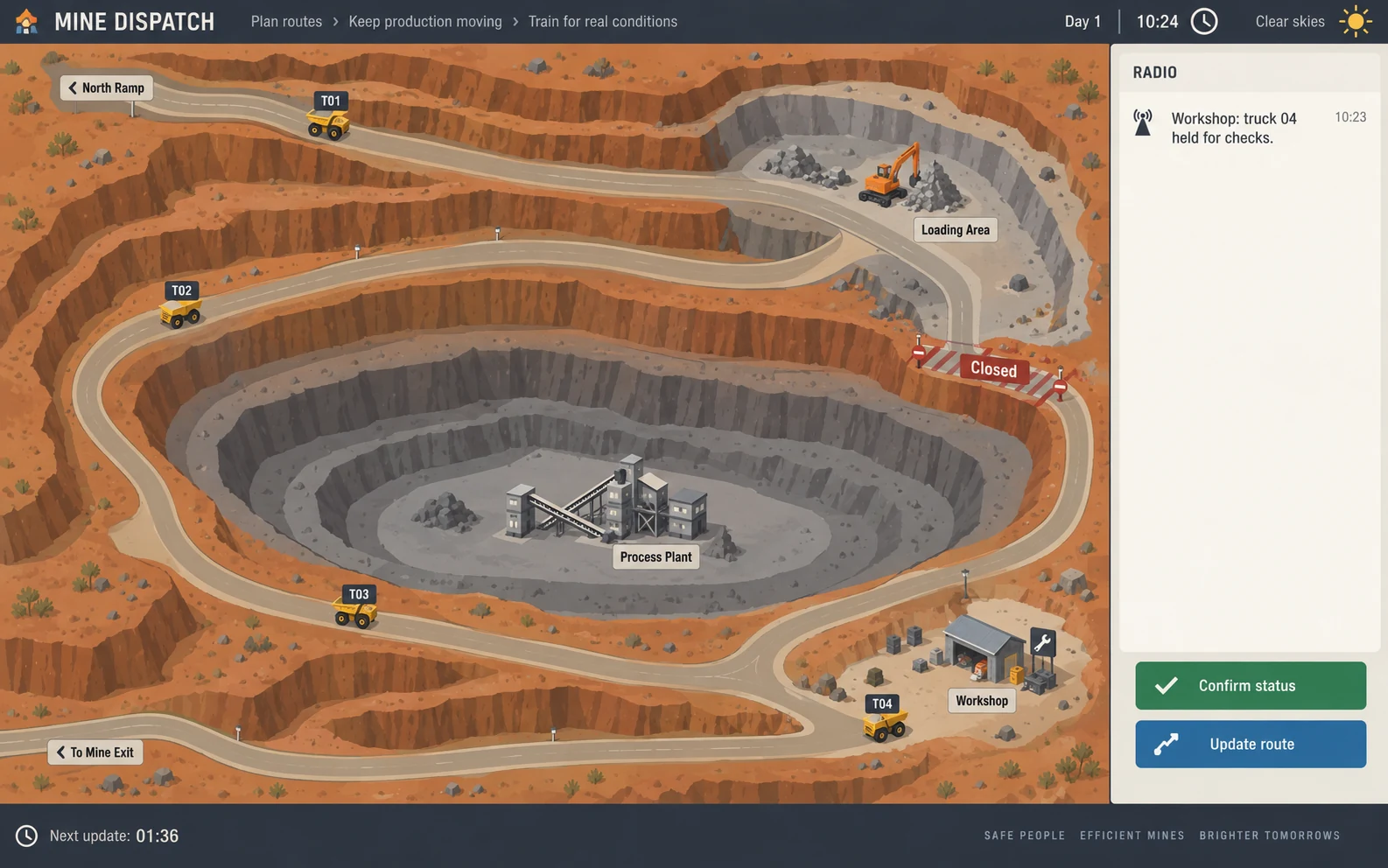
Dispatch & production
2D dispatch strategy
A truck is held for checks and a route closes. Keep the plan current without losing the message.
Read timed radio updates on a mine route board. Confirm equipment status, revise a fictional assignment and tell the next role what changed before another update arrives.
Prioritise information and close the communication loop. Review how one unconfirmed assumption affects other crews.
 Game concept
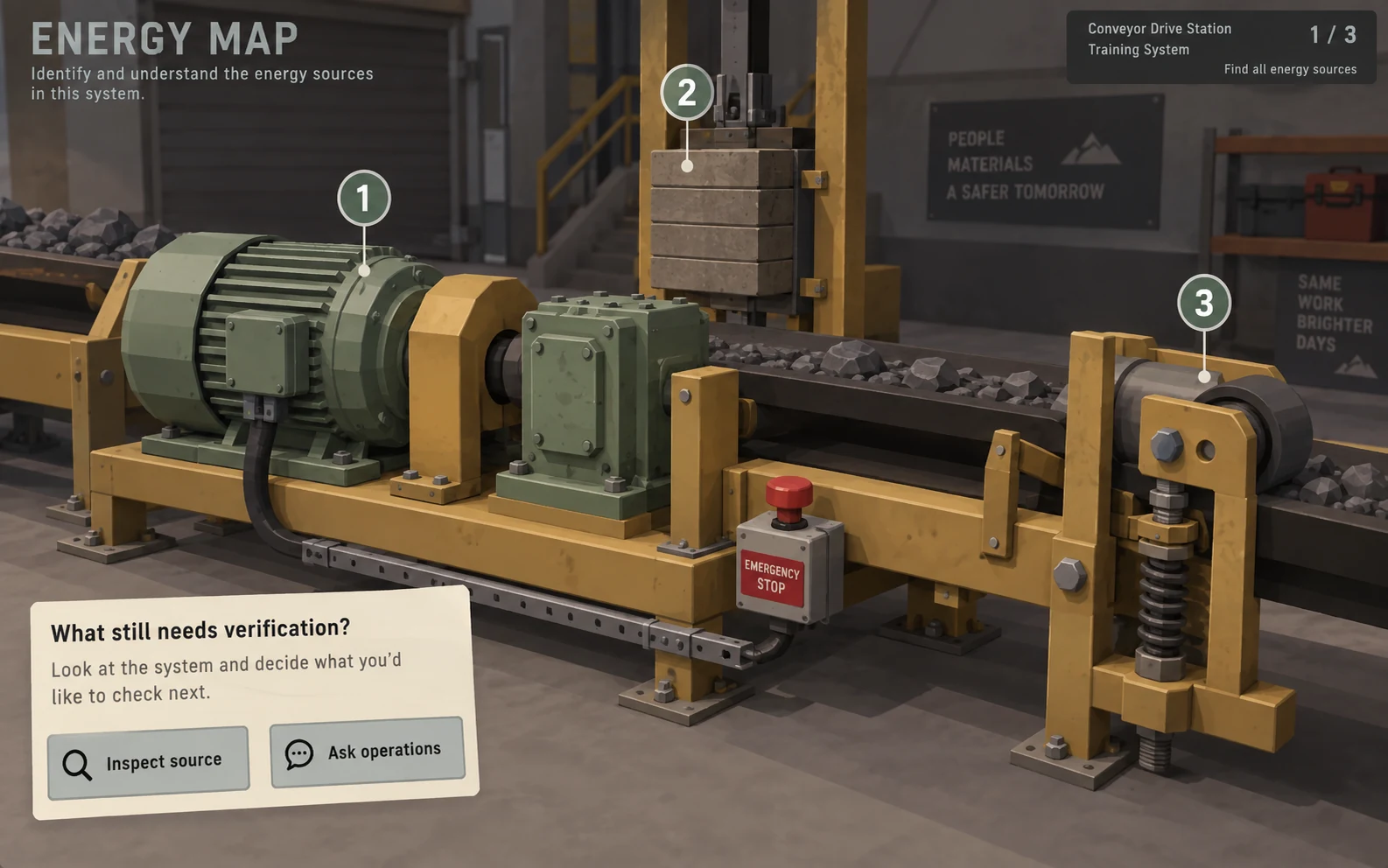
Maintenance & reliability
Interactive systems puzzle
The equipment has stopped. What still needs to be verified before the job can move on?
Inspect a simplified machine and trace its energy sources. Work through an operator-approved scenario, record unresolved checks and hand unfinished work to the next role.
Recognise that stopped and verified are different states. Discuss control ownership and handover against the site’s approved procedure.
 Game concept
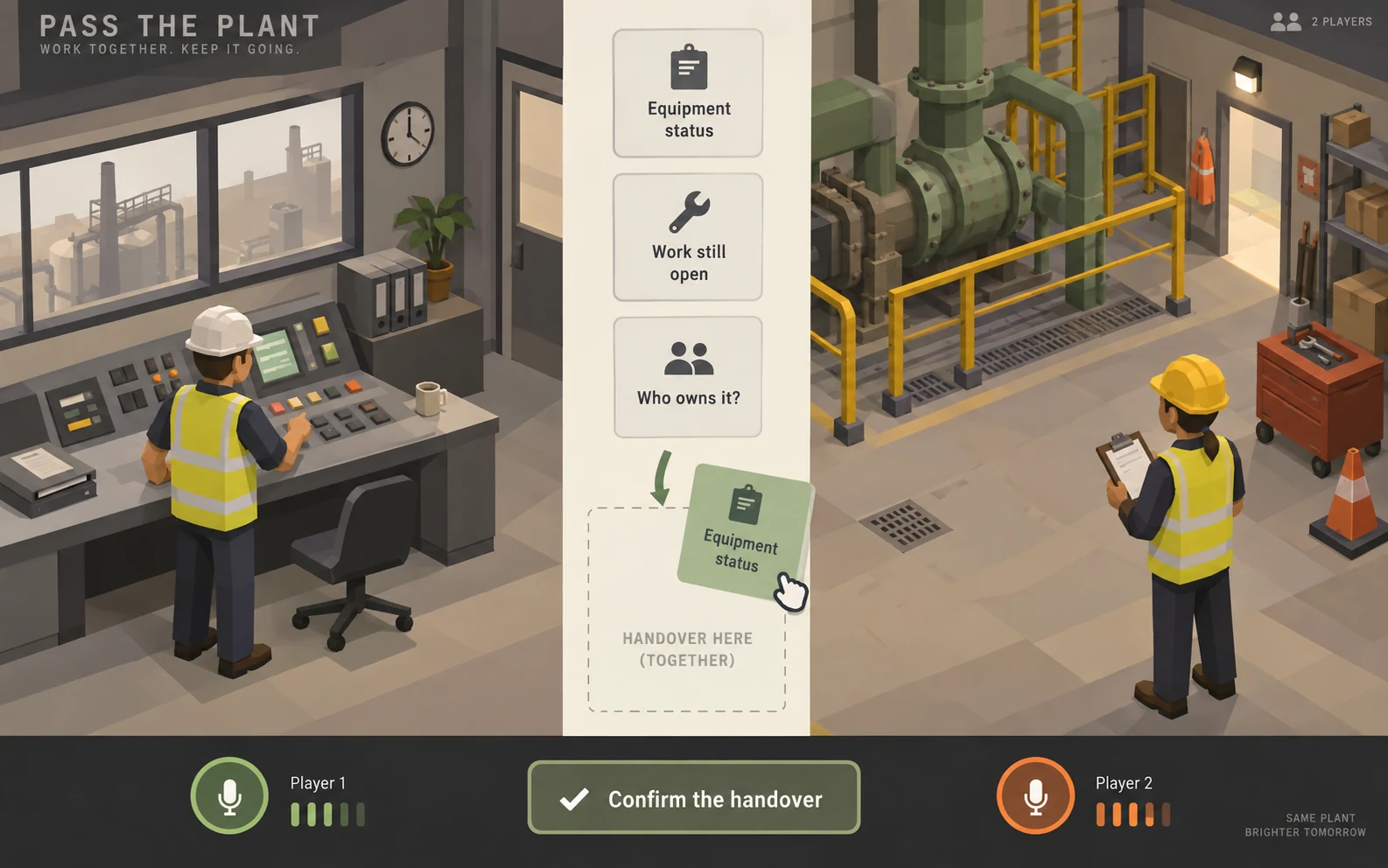
Shift leadership & control
Two-player handover rehearsal
One player has the outgoing shift’s picture. The other needs enough context to take over.
Build a short written and spoken brief, then swap roles. The incoming player checks equipment status, temporary arrangements and open work before confirming the handover.
Make unknowns explicit and name the next owner. Compare what the outgoing player intended with what the incoming player understood.
 Game concept
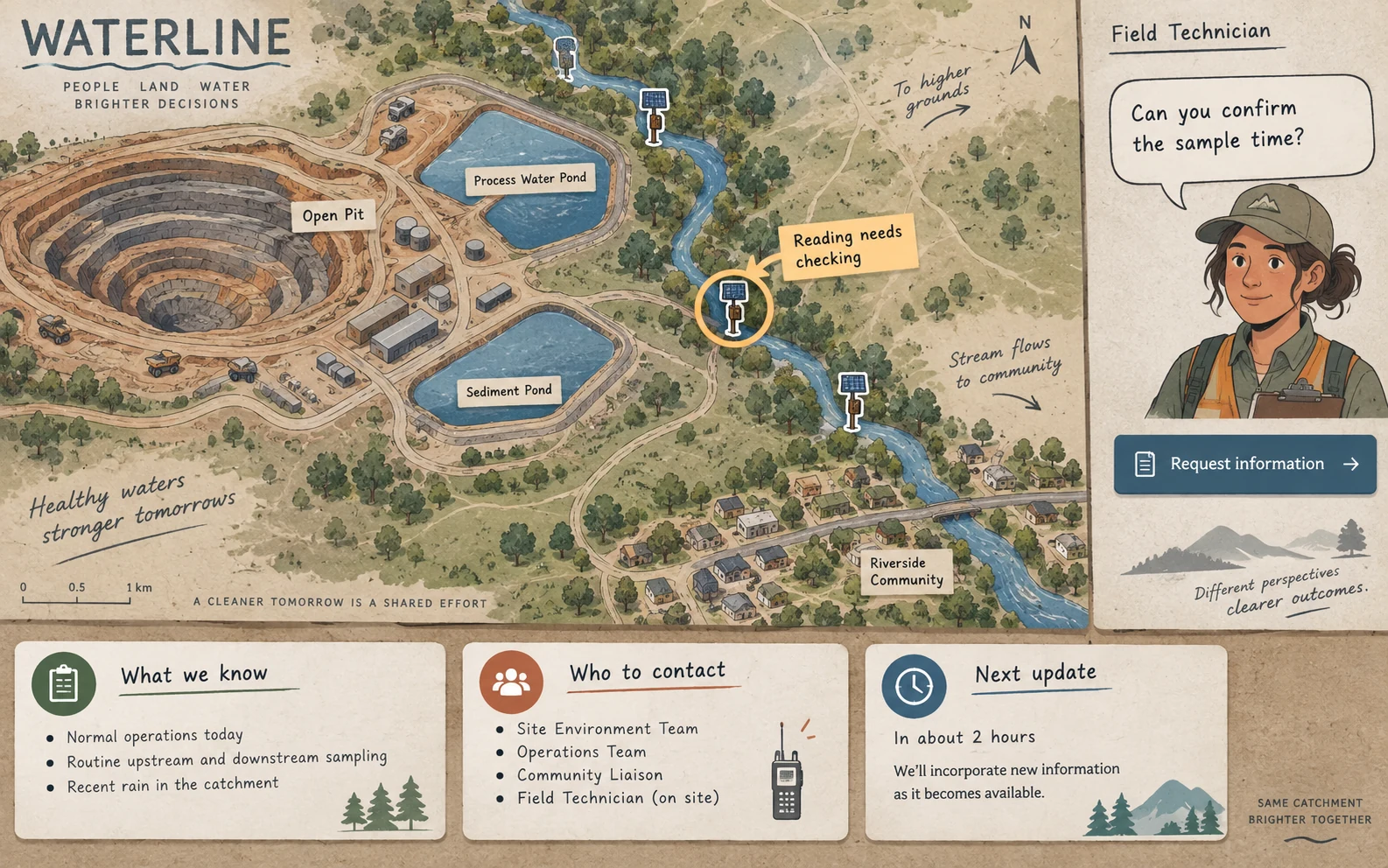
Environment & community
Map-based incident tabletop
A monitoring alert reaches the control room. The team needs a clear picture before it can give a clear update.
Investigate a fictional water alert on a site map. Check the information source, coordinate with the responsible roles and draft a factual update as new details arrive.
Separate known facts from questions still open. Practise information flow using a scenario reviewed against the site’s environmental response plan.
Start with one role and one recurring situation. Agree what useful practice looks like before expanding the programme.
Bring an approved procedure, an anonymised handover or a recurring training question. We build around the learner’s role and what they can actually decide.
Give contractors and new starters the same scenario with role-specific questions. Use their choices to focus the conversation during the site briefing.
Show the information the player acted on and what they left unresolved. Supervisors can compare approaches without turning the debrief into another slide deck.
Your operational owners review the content and feedback. Game completion records practice; site induction, authorisation and supervised assessment stay with your team.
Choose the format with your training team. We design the session around the learner, the setting and the devices they use.
Use short process or coordination games in technical training, with reporting matched to your learning platform.
Prepare contractors with phone-friendly site context before their supervised induction and practical assessment.
Run a handover or dispatch scenario together. Discuss what changed and what the next crew needs to know.
Build a recognisable plant or work area when equipment relationships and spatial decisions are part of the lesson.
Language, accessibility and reporting needs are agreed before the build.
Start with one situation. Build it with the people who know the work, then test it with the people who do it.
Choose the learner and a recurring decision. Agree what useful practice should show.
Map the choices and consequences with your subject experts. Set the learning focus.
Make a playable pilot. Test the feedback and controls with a small learner group.
Put it into the training session. Review learner choices and refine the next version.
Bring one decision your crews need to get right. We’ll explore a game that fits the site, the learner and the training session.